
If you've been living with back pain — especially disc-related pain — you've probably tried most of the usual routes. Rest, painkillers, maybe physiotherapy or a course of massage. For many people, these approaches help to a degree. But for those with persistent disc pain, herniated discs, sciatica, or spinal stenosis, standard treatment sometimes falls short.
That's where IDD Therapy comes in. At BodyCare Sports Injury Clinic in Newmarket, it's one of the most specialised treatments we offer — and for the right patients, the results can be significant.
Here's what it actually is, how it works, and whether it might be right for you.
What Is IDD Therapy?
IDD stands for Intervertebral Differential Dynamics. It's a form of spinal decompression therapy that uses a computer-controlled system to apply a precise pulling force to a specific segment of the spine.
Unlike older traction tables — which applied a general pulling force along the whole spine — IDD Therapy targets a single spinal level. If you have a problem at L4–L5 (a common disc level), the system is calibrated to work specifically there, oscillating gently to reduce disc pressure, encourage hydration of the disc, and allow the body's natural healing processes to take effect.
The technology was developed in the United States and is used by clinics across Europe and North America. There are currently fewer than 200 machines in the UK, which is why it's not something you'll find everywhere.
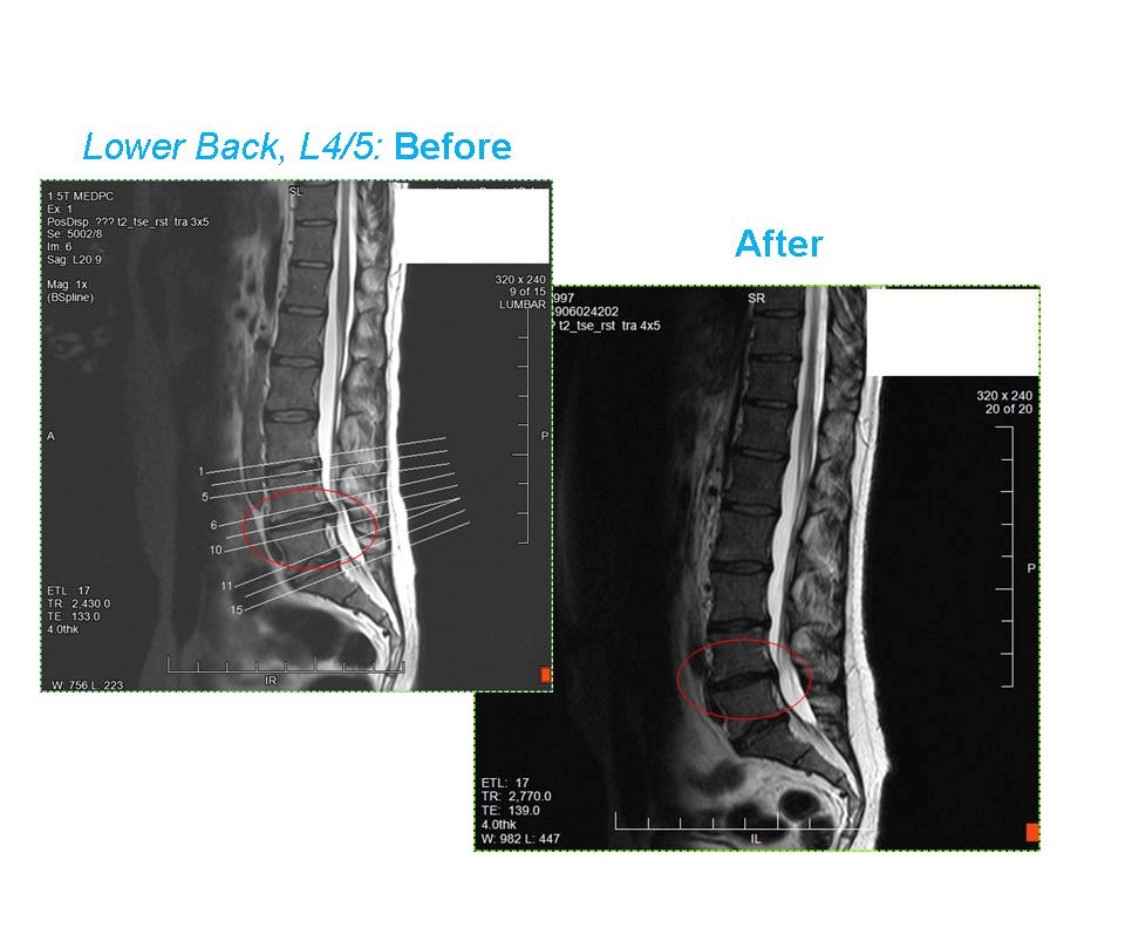
What Conditions Does It Treat?
IDD Therapy is most effective for:
- Herniated or bulging discs — where disc material is pressing on a nerve root, causing pain, numbness, or weakness in the back, buttock, or leg
- Sciatica — particularly where nerve root compression in the lower back is the cause of the radiating leg pain
- Degenerative disc disease — reduced disc height causing chronic back pain and stiffness
- Spinal stenosis — narrowing of the spinal canal that causes pain, especially with walking or standing
- Chronic lower back pain — where other conservative treatments have provided limited or temporary relief
It's not a treatment for everyone with back pain — but for people with confirmed disc-related conditions who haven't found lasting relief through other means, it's worth a serious look.
What Does a Session Feel Like?
Patients often describe IDD Therapy sessions as relaxing — some fall asleep. You lie on the treatment table, a harness is fitted around your pelvis, and the machine applies a rhythmic, oscillating distraction force to the targeted spinal level over approximately 25 minutes.
The force is gentle — it's not painful, and there's no sharp pulling or sudden movement. The oscillation helps to reduce the protective muscle spasm that often surrounds a painful disc, allowing the decompression to reach the joint itself.
A typical course of treatment is 10–20 sessions, usually spread over 6–8 weeks, combined with targeted exercises to support recovery and prevent recurrence.

Why Precision Matters
This is the part that distinguishes IDD Therapy from general traction. The computer-controlled system allows us to set the exact level of distraction force, the precise spinal level being targeted, and the pattern of oscillation — and to adjust all of these as treatment progresses.
For a patient with an L5–S1 disc herniation and left-sided sciatica, that specificity matters enormously. We're not applying force to the whole spine and hoping some of it reaches the right place. We're treating the exact disc that's causing the problem.
What Does the Evidence Say?
Several studies have demonstrated positive outcomes for IDD Therapy in patients with lumbar disc conditions, including reductions in pain scores and improvements in functional ability. It's not a guaranteed cure, and like any treatment, outcomes vary between individuals. But for patients who are appropriate candidates — particularly those who want to avoid surgery or who have exhausted other conservative options — the evidence supports it as a credible treatment approach.
Is IDD Therapy Right for You?
A consultation at BodyCare Clinic is the right starting point. We'll review your history, any imaging you have (MRI scans are particularly useful), and carry out a clinical assessment to determine whether IDD Therapy is appropriate for your specific condition.
Not everyone is a candidate. IDD Therapy is not suitable for patients with certain types of fracture, severe osteoporosis, spinal implants, or during pregnancy. We'll be clear about this at the outset.
If you've been managing back or disc pain for a while and haven't found a lasting solution, this is a conversation worth having.