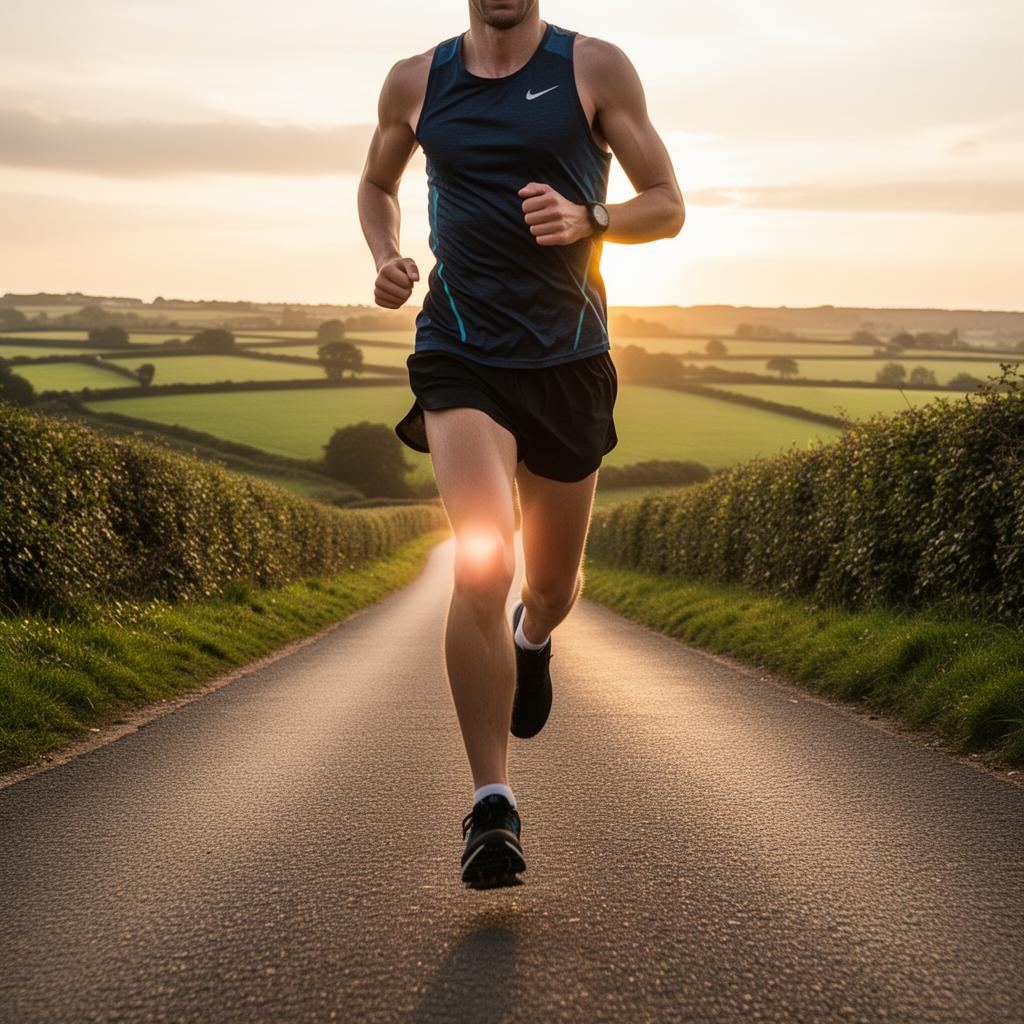
Knee pain is one of the most common complaints we see at BodyCare Sports Injury Clinic in Newmarket, and in most cases, the knee itself isn't actually the problem.
That might sound strange, but it's one of the most important things a runner can understand about their body. The knee is caught between the hip above and the foot below. When either of those isn't moving or loading correctly, the knee takes the strain. It becomes the site of pain, but rarely the source of it.
Here's what's usually going on and what you can do about it.
The Most Common Causes of Knee Pain in Runners
1. Poor Hip Stability and Weak Glutes
Your glutes are the primary stabilisers of your pelvis and hip during running. When they're not doing their job, whether through weakness, poor activation, or fatigue, the femur (thigh bone) tends to rotate inward slightly on each stride. That internal rotation changes how the kneecap tracks in its groove, increasing friction and pressure on the front of the knee.
This is one of the most common causes of patellofemoral pain (runner's knee) and is almost always missed when people focus on stretching the knee rather than strengthening the hip.
2. Changes in Training Load
The body adapts to load, but it needs time to do it. Increasing your weekly mileage too quickly, adding hill work, or switching from road to trail without a gradual transition all put more demand on your knee structures than they're ready for. Tendons and cartilage adapt more slowly than muscles, so you can feel fit while the joint is under stress it hasn't caught up to yet.
A general guideline: increase total weekly distance by no more than 10% per week.
3. Footwear: Worn Out or Wrong for Your Foot
Running shoes have a lifespan of around 400 to 500 miles. After that, the midsole cushioning and support have degraded significantly, even if the upper still looks fine. Running in worn-out shoes is one of the quieter causes of knee pain and one that's easy to fix.
Equally, wearing the wrong type of shoe for your gait pattern, particularly if you overpronate or supinate, can alter how load travels through the lower limb and into the knee.
4. Tight Hip Flexors and Quadriceps
Long periods of sitting shorten the hip flexors and reduce their range of movement. When you then run, that restriction affects your stride mechanics, particularly hip extension, and places more compensatory demand on the knee. Tight quads also increase the pull on the patellar tendon, contributing to pain at the front of the knee.
5. Running Technique and Gait
Overstriding, landing with your foot too far in front of your centre of mass, increases the braking force through the knee with every step. A slight increase in cadence (steps per minute) and a focus on landing with your foot under your hip rather than ahead of it can make a significant difference to knee stress.
What to Do About Knee Pain
Don't stop completely. Complete rest typically isn't the answer, and in many cases it slows recovery. Keeping mobile and maintaining your cardiovascular base while reducing load is usually the better approach.
Address the cause, not just the symptom. Ice and ibuprofen might reduce pain short-term, but if the glutes aren't activating or your training load is too high, the pain will return.
Get it properly assessed. The most important thing is understanding why your knee hurts. A thorough assessment looking at movement quality, muscle strength, foot position, and running mechanics gives you a clear picture of what needs to change and a structured rehab plan to get there.
At BodyCare Sports Injury Clinic in Newmarket, our sports injury specialists work with runners across Newmarket, Cambridge, and Suffolk to find the real cause of knee pain and fix it, so you can get back to training without it coming back.
Key Exercises That Help
These won't replace a proper assessment, but they're a solid starting point for most runners:
Glute Bridges
Lying on your back, feet flat on the floor, drive your hips up until your body is in a straight line. 3 sets of 15. Focus on squeezing your glutes at the top.
Clamshells with Resistance Band
On your side, knees bent, band above the knee. Open the top knee like a clamshell without rotating your pelvis. 3 sets of 20 each side.
Single-Leg Calf Raises
Stand on one foot and slowly raise and lower your heel. 3 sets of 15 each leg. Strengthens the calf and helps absorb impact forces through the lower limb.
Wall Sits
Back against the wall, thighs parallel to the floor. Hold for 30 to 45 seconds, 3 sets. Builds quad strength and stability around the knee.
When to Get Help
If your knee pain has been present for more than two to three weeks, is getting worse rather than better, or is affecting your ability to complete easy training sessions, it's worth getting it properly assessed.
Running through it and hoping it resolves is rarely the right call, and the longer a problem persists, the longer the recovery tends to be.