Serving Cambridge & Cambridgeshire
IDD Therapy for Cambridge Patients
The nearest specialist provider of non-surgical spinal decompression to Cambridge. Disc bulges, sciatica, chronic back pain — resolved without surgery, by the only IDD clinic within a 25-minute drive of the city.
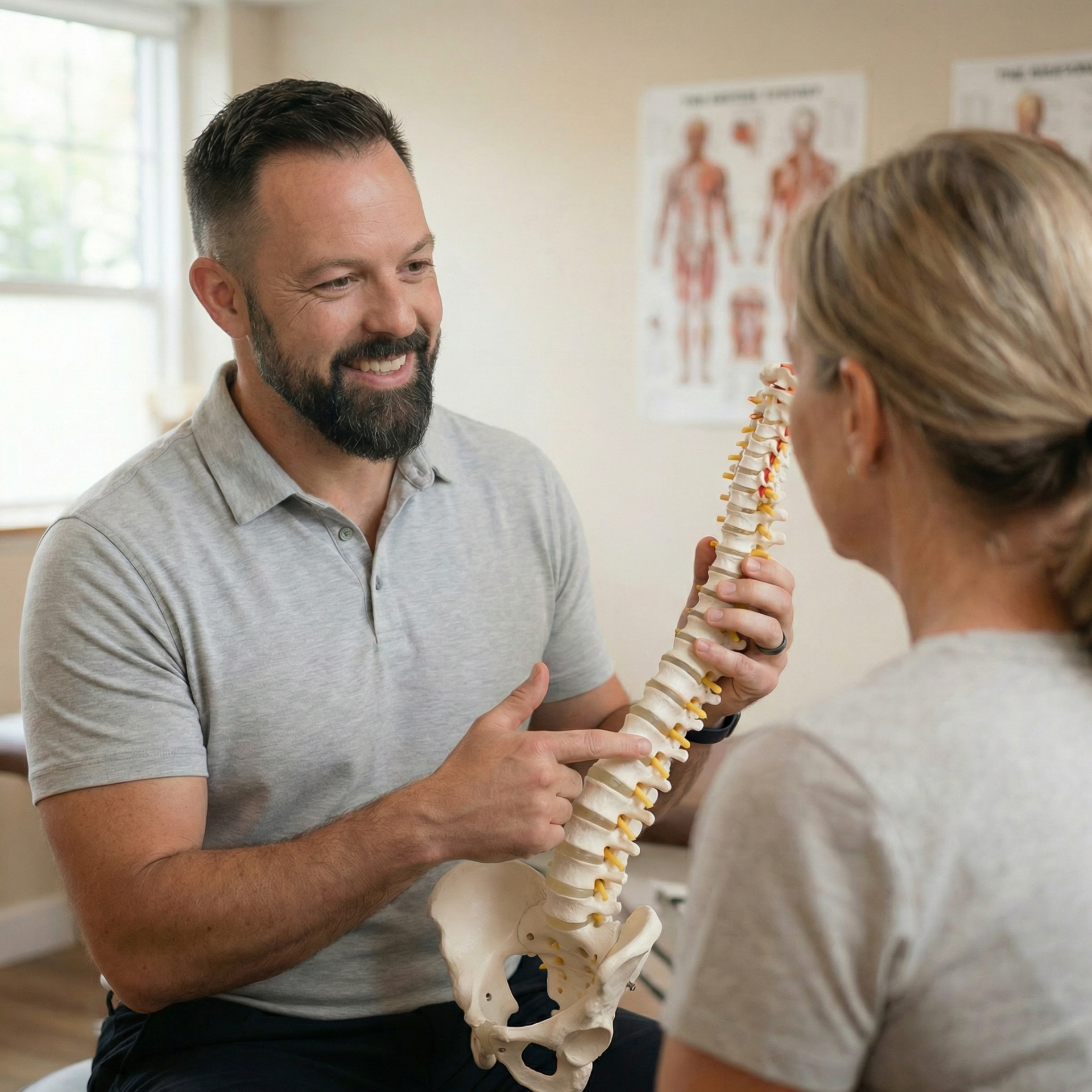
Why Cambridge patients travel to Kentford for IDD Therapy
Cambridge is densely served by physio chains, sports clinics and the world-class Addenbrooke’s network — but specialist non-surgical spinal decompression is not something most local providers can deliver. IDD Therapy requires the Accu-SPINA system and a clinician trained in computer-controlled disc decompression. BodyCare is the nearest clinic to central Cambridge offering it.
Most Cambridge patients who end up driving over to Kentford have already been through the local pipeline. The pattern is consistent: months of intermittent low back or leg pain that finally became too much, a GP appointment that produced painkillers and an NHS physio referral, six sessions of generic stretches and core work that took the edge off without resolving anything, often a private chain physio for another course, sometimes a cortisone injection from a Cambridge consultant that bought eight comfortable weeks before the pain came back, and somewhere along the way an MRI report mentioning a disc bulge at L4/L5 or L5/S1. Each step helped a little. None of it lasted.
What unites all of those earlier treatments is that none of them target the disc itself. Manual physio addresses the protective muscle pattern around a disc problem — it cannot decompress the disc. Steroid injections quieten inflammation around an irritated nerve root for a few weeks — they leave the mechanical cause untouched. Generic core and Pilates work strengthens the system around an injury but does nothing to reduce the pressure inside the disc that is producing the pain. The standard Cambridge non-surgical pathway works on everything close to a disc problem and never reaches the disc. IDD Therapy is the modality that does — the mechanism is explained further down — and the practical effect is that a patient who has had eight months of progressive treatment with diminishing returns often gets meaningful change within four to six sessions.
The Cambridge patients we treat tend to fall into a few familiar profiles. Research and academic staff with twelve years of long desk hours and increasingly stubborn low back pain. Tech and biotech professionals — usually in their thirties or forties — who commute by bike, then sit for eight hours, then commute home, and discover that combination has stopped working for their spine. Cambridge cyclists with high mileage on the Roman Road or out to Newmarket who develop recurrent hip-flexor and lumbar pain that no amount of stretching shifts. Recreational rowers with a back that started complaining in their fifth season. And the largest group: patients who have already been told surgery is the next step and want a serious non-surgical option before consenting to it.
Not every Cambridge patient should drive to us. Acute injuries with severe pain, sudden loss of bladder or bowel control, or progressive neurological symptoms need A&E or an urgent NHS referral — not an outpatient assessment. Inflammatory back pain that fits a pattern like ankylosing spondylitis is rheumatology’s territory, not ours. Fractures need orthopaedic care. We will tell you honestly at the first phone call if your case sits outside what IDD Therapy can help with — we do not treat patients we cannot help.
Specialist diagnosis, not generic rehab
30+ years and 100,000+ patients. Mechanism-based assessment, in-clinic diagnostic ultrasound, and continuity of care with the same clinician throughout.
Free on-site parking
Directly at the clinic on Bury Road, Kentford. No city-centre parking fees, no walking, no time pressure. 25–30 min from central Cambridge via the A14.
Honest timelines and pricing
Initial assessment £70. Treatment sessions £55. Typical IDD programme 4–8 sessions for sciatica, up to 20 for chronic multi-level disc problems. We tell you the range after the first appointment.
Non-surgical, evidence-based
IDD Therapy is the clinically proven spinal decompression modality used to help patients avoid disc surgery. We see post-surgical patients too — provided there is no metalwork at the level we would be treating.
Why it works when other Cambridge treatments have not
The mechanism behind IDD Therapy
Most treatments you have tried in Cambridge — manual physio, sports massage, osteopathy, even epidural injections — work on the soft tissue or the inflammation around a damaged disc. They do not reach the disc itself.
IDD Therapy uses computer-controlled decompression to gently separate the vertebrae at the exact level of your problem. This creates negative pressure inside the disc, which:
Read the full mechanism in the IDD Therapy overview and the deeper write-up in IDD Therapy explained: non-surgical approach to disc and back pain.
What your IDD programme looks like
A structured course designed to resolve disc-related pain — not manage it.
Comprehensive assessment
Detailed mechanical history, neurological examination, dural tension testing. We identify the exact disc level and nerve root involved — and whether IDD is the right call for your case. If it is not, we say so.
Initial relief phase
First IDD sessions on the Accu-SPINA. Most patients notice a reduction in leg pain or referred symptoms within 2–3 sessions. Frequency depends on your case and your drive from Cambridge — we cluster sessions sensibly.
Healing and strengthening
Continued IDD combined with targeted rehab — directional-preference exercises, deep stabiliser retraining, neural glides. Real rehab specific to your stage of recovery, not generic exercise sheets.
Discharge and long-term resolution
Final sessions focus on prevention — desk setup, driving posture for your Cambridge commute, lifting mechanics, what to do if symptoms flare. You leave with a personalised home programme so you do not need us forever.
Representative Cambridge patient
A case from the Cambridge caseload
- Patient
- Male, late 30s, biotech professional based in the Cambridge Science Park. Cycles around 70 miles a week — commutes from Trumpington and rides at weekends. Long working days at a standing desk that he stopped finding comfortable around three years ago.
- Presentation
- Eighteen months of intermittent low back pain that became constant in the previous four months, with left-sided buttock and posterior thigh pain that worsened on cycling and on long meetings. Two private Cambridge physio courses (six and eight sessions respectively), a cortisone injection at an Addenbrooke’s outpatient clinic in the prior year that bought around ten comfortable weeks, ongoing daily anti-inflammatories, and an MRI showing a posterolateral L4/L5 disc bulge with mild L5 nerve root contact. Sleep was disturbed by needing to change position every two hours. He was about to be referred for a surgical opinion when his GP suggested he try non-surgical decompression first.
- Diagnosis
- Mechanical low back pain with secondary L5 nerve root irritation, driven by the L4/L5 disc and aggravated by the combined load pattern of long static sitting and sustained cycling. Neurological signs were mild and matched the imaging — no surgical red flags.
- Treatment
- Twelve IDD Therapy sessions over eight weeks, deliberately clustered into two visits per week so the Cambridge drive was twice a week, not three times. Combined with directional-preference rehab, bike-fit correction (saddle height, reach, cleat angle) and a sit-stand routine for the office desk that removed the long static loads.
- Outcome
- Leg pain resolved by session six. Low back pain reduced to a low intermittent ache by session ten. Painkillers stopped after week three. Back on the bike at low mileage from week four, full commuting mileage from week eight. Returned to weekend distance riding at twelve weeks. Surgical referral cancelled. Pain-free at twelve-month follow-up.
Composite case based on the typical Cambridge patient profile we treat. Individual outcomes vary.
Frequently asked questions — Cambridge patients
How long is the drive from central Cambridge to your clinic?
Typically 25–30 minutes via the A14 eastbound to junction 37, then 2 minutes to Bury Road, Kentford. Free on-site parking at the clinic — no city-centre parking hassle, no walking. Off-peak runs faster.
Why come to Kentford for IDD Therapy when I live in Cambridge?
Because there are very few IDD Therapy providers in the region. BodyCare is the nearest specialist clinic to Cambridge offering it. For disc bulges, sciatica and chronic disc-related pain, IDD is the leading non-surgical option, and the Accu-SPINA system is not equipment most Cambridge physios have access to.
I have already had MRI imaging in Cambridge — should I bring it?
Yes, please bring the report and the disc if you have it. We will review it as part of your assessment, but we will not rely on the report alone — diagnosis is clinical, and imaging supports the picture rather than dictating it. Half the population over 40 has disc bulges on MRI without symptoms; we treat the patient, not the scan.
How many sessions do most Cambridge patients need?
Typical programmes are 4–8 sessions over 6–10 weeks for sciatica, or up to 20 sessions over 6–12 weeks for chronic multi-level disc problems. We give you an honest range after the first assessment — and we stop when you are better, not when a package runs out.
Can I get a second opinion if a Cambridge consultant has recommended surgery?
Yes — second opinions before surgery are a regular part of our caseload. We will honestly tell you whether your case is one where IDD has a good chance of working, or whether surgery is genuinely the right path. We never treat patients we do not think we can help.
Do you treat Cambridge cyclists with recurring back or hip pain?
Yes. Cambridge has a large cycling population, and recurring lower-back, hip-flexor and IT-band problems from high mileage are a regular caseload. Where the cause is disc-related, IDD is often the missing piece after months of generic physio.
Stop driving around Cambridge looking for an answer.
The disc treatment you need is 25 minutes away.
Most patients feel improvement within 2–3 sessions. The drive becomes worth it fast.
Free 15-minute phone consultation available